Keeper
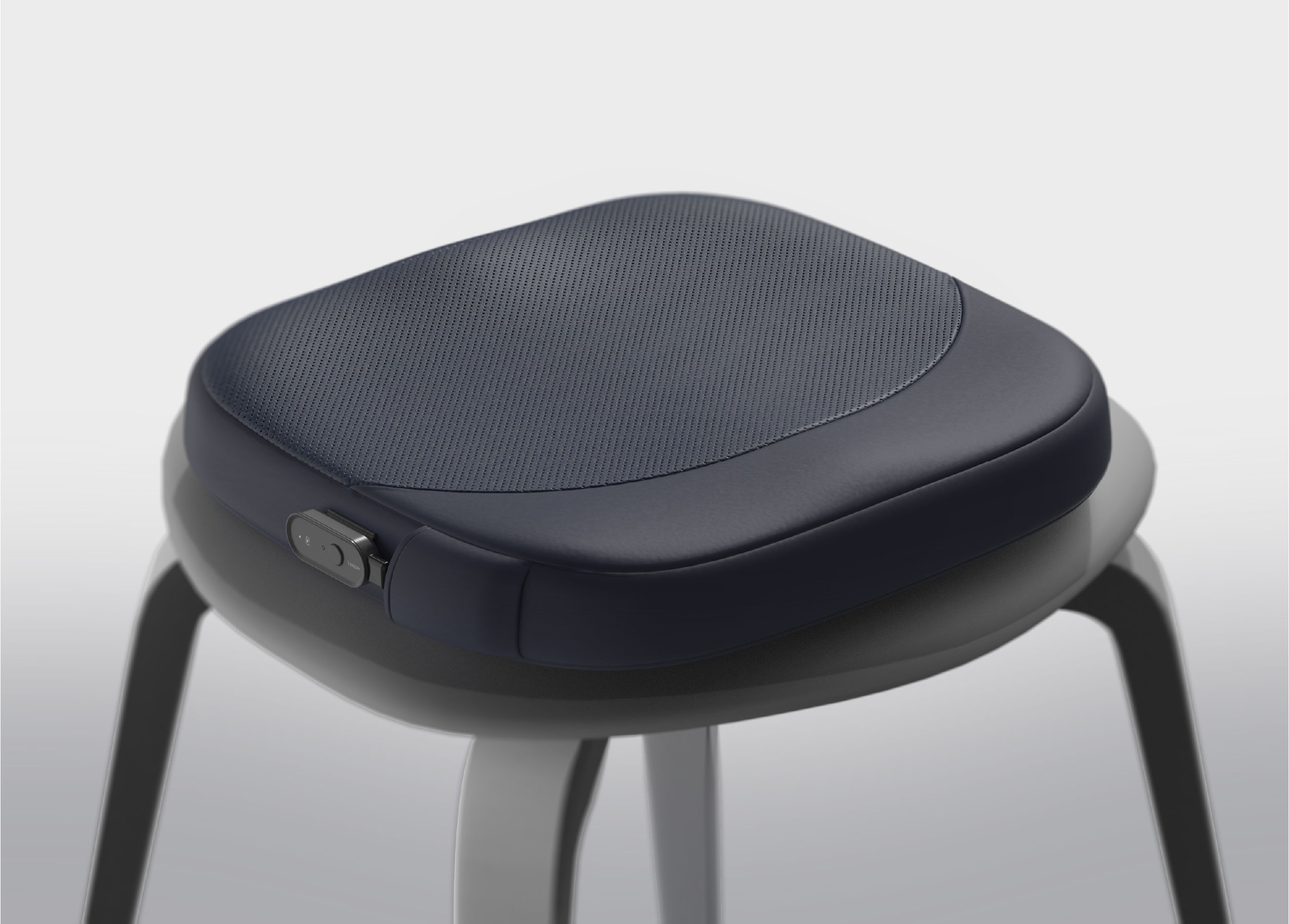
As the founder and product manager of Keeper, an IoT cushion designed to assist with posture correction, I led the project from ideation and prototyping to mass production. During the early development phase, Keeper received multiple awards from both private and public institutions, including Pfizer and the Seoul City. Our crowdfunding campaign exceeded its goal by 1,012%, enabling full-scale product development and launch. Following release, we secured over 10 patents and trademarks and attracted approximately $1 million in investment and government subsidies.
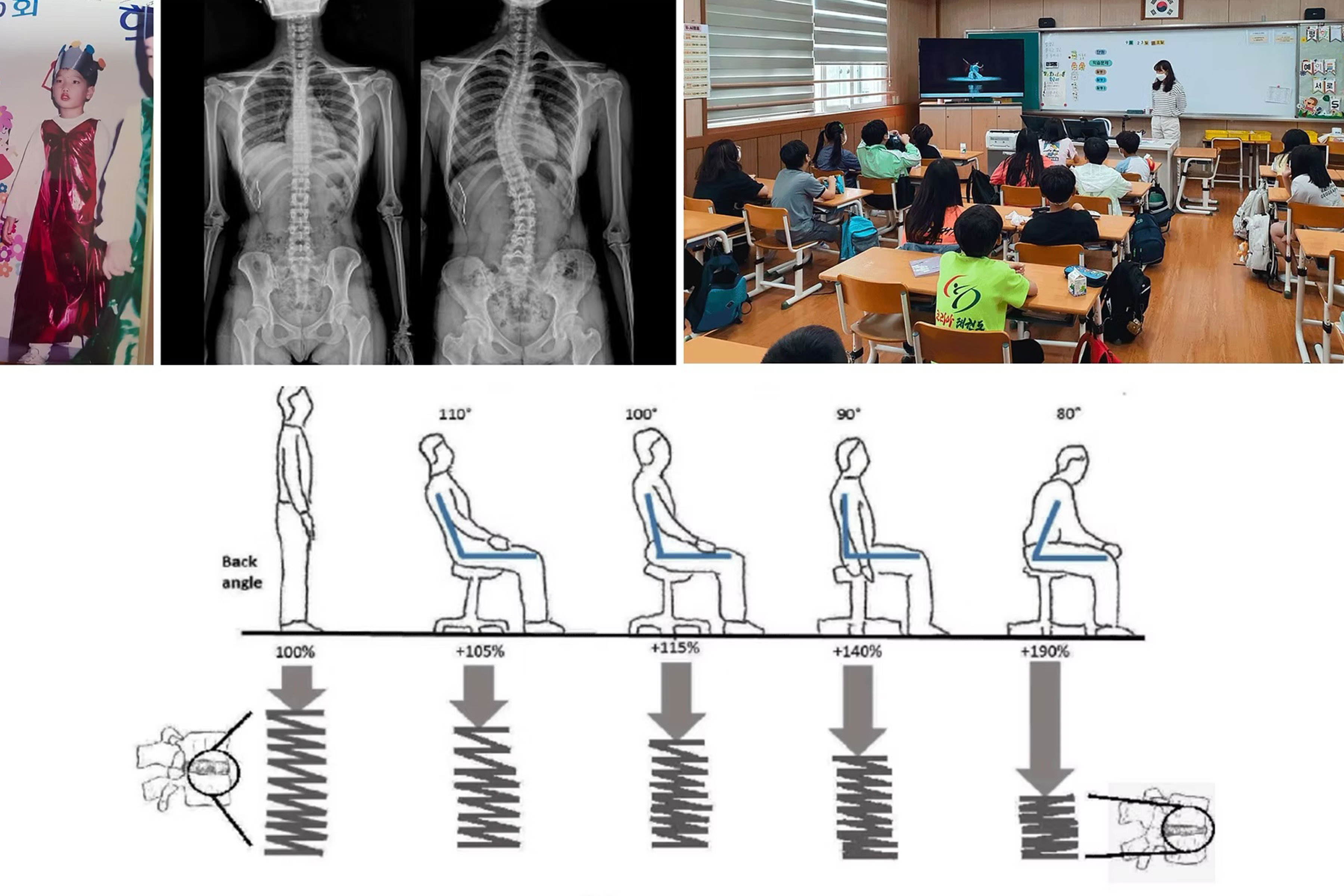
Inspiration from the suffering
Growing up in South Korea’s highly competitive education system, I spent most of my teenage years sitting for long hours in classrooms and study halls. These habits, combined with a lack of movement, led to scoliosis — a condition whose effects I still feel today. Later, at Korea University’s Ergonomics Design Lab, I wanted to turn that personal experience into a design opportunity to help others facing similar pain. I began to wonder if there was a way to improve posture without asking people to move more. That question led me to reexamine the chair, a fixture of our sedentary lives — and soon, I began to see its cushion not just as a part of it, but as an independent object full of design potential.
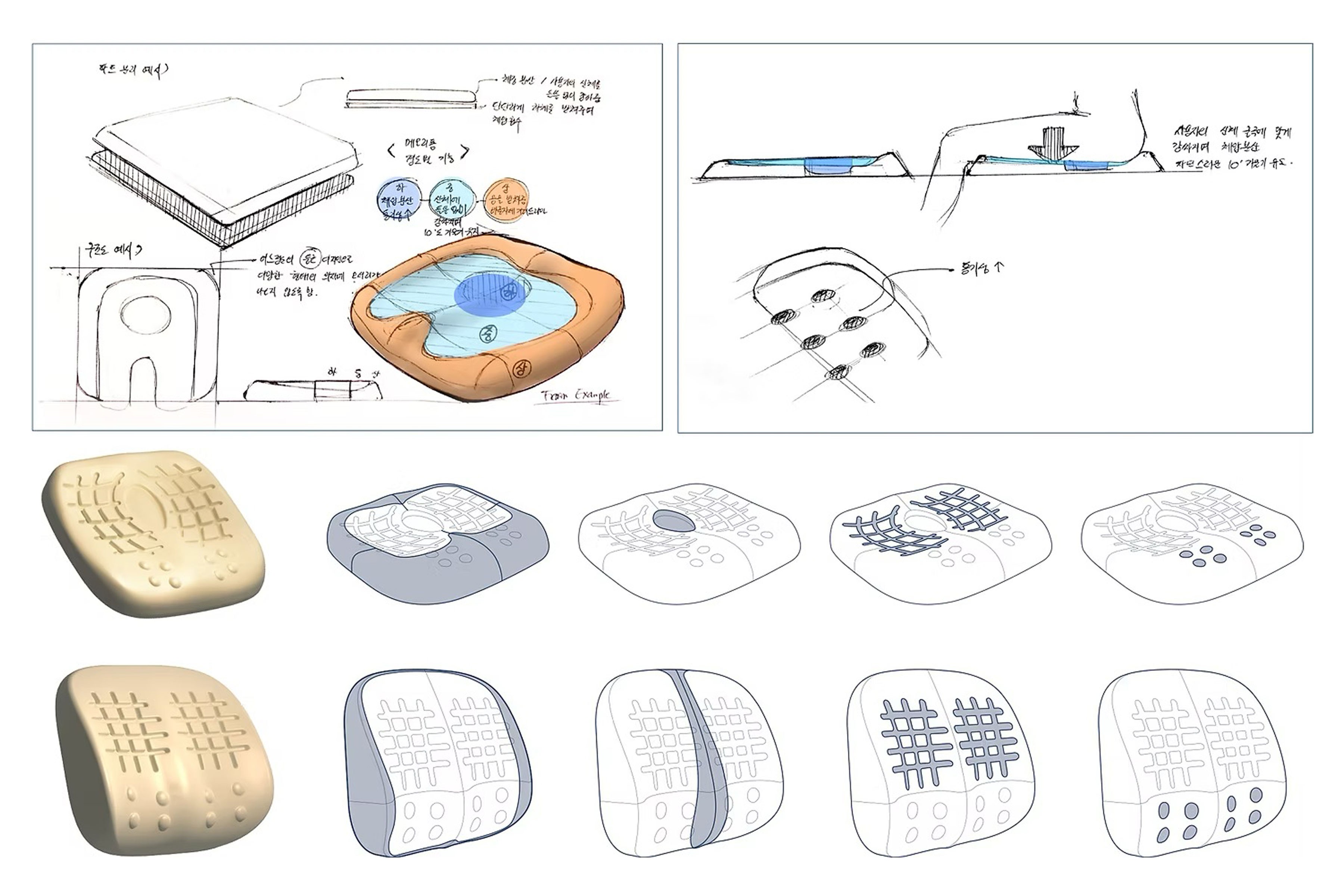
Shaping an ergonomic foam
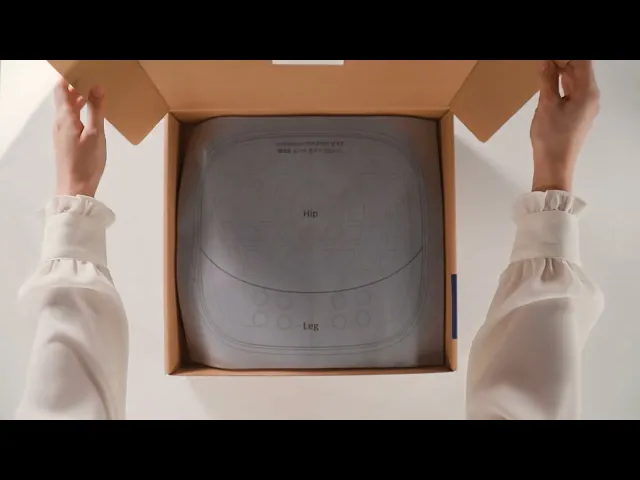
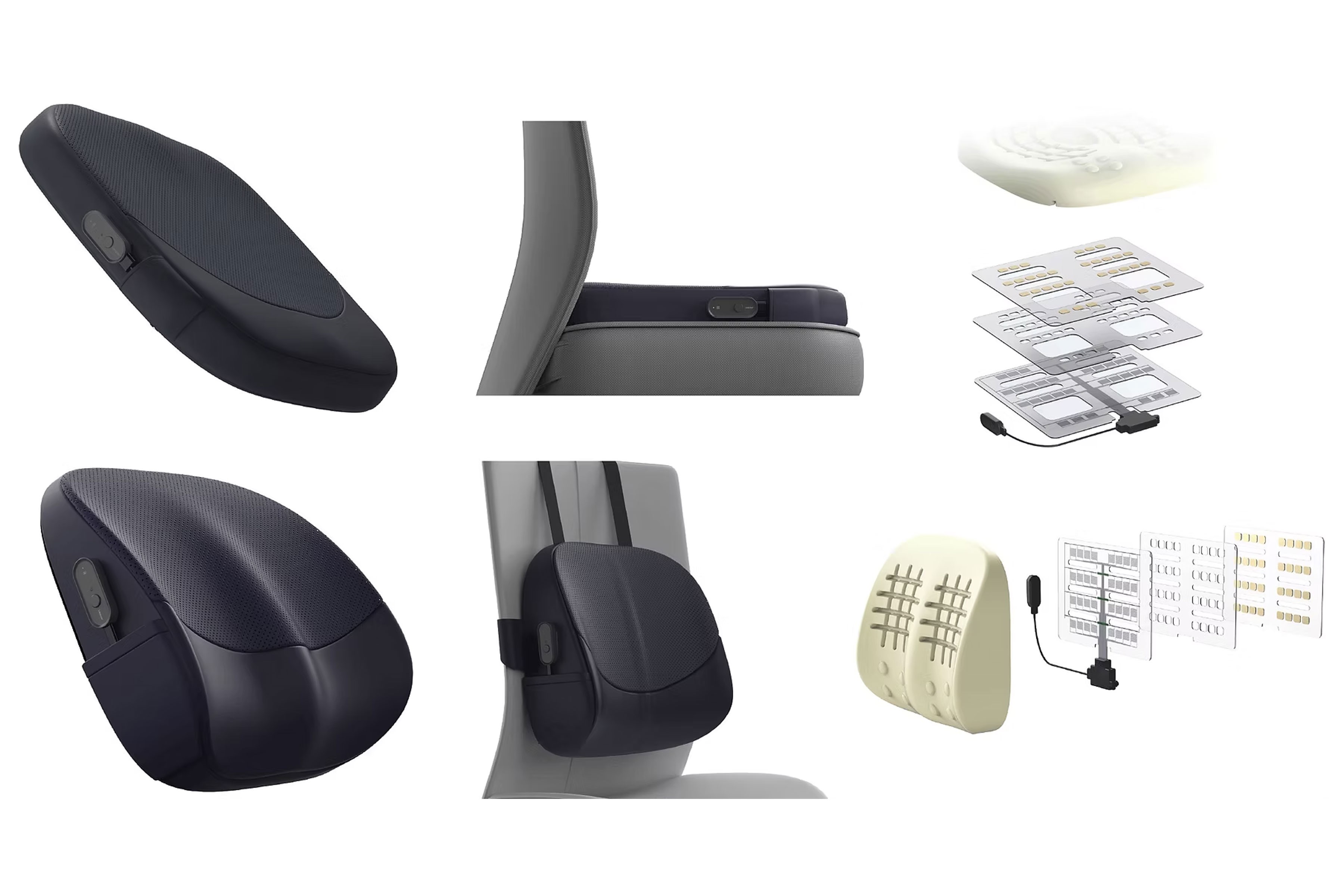
Posture is ultimately a matter of habit. Even with long hours of sitting, maintaining healthy posture habits can prevent much of the strain — but building those habits is difficult. I wanted Keeper to help people sustain good posture effortlessly, which meant embedding IoT sensors that could provide gentle, real-time feedback. Still, I believed that no amount of smart technology could make up for an uncomfortable cushion. To get the fundamentals right, I studied dozens of existing cushions — analyzing their foam density, elasticity, and ergonomic contour — and designed a four-layer structure that supports alignment while feeling naturally comfortable.
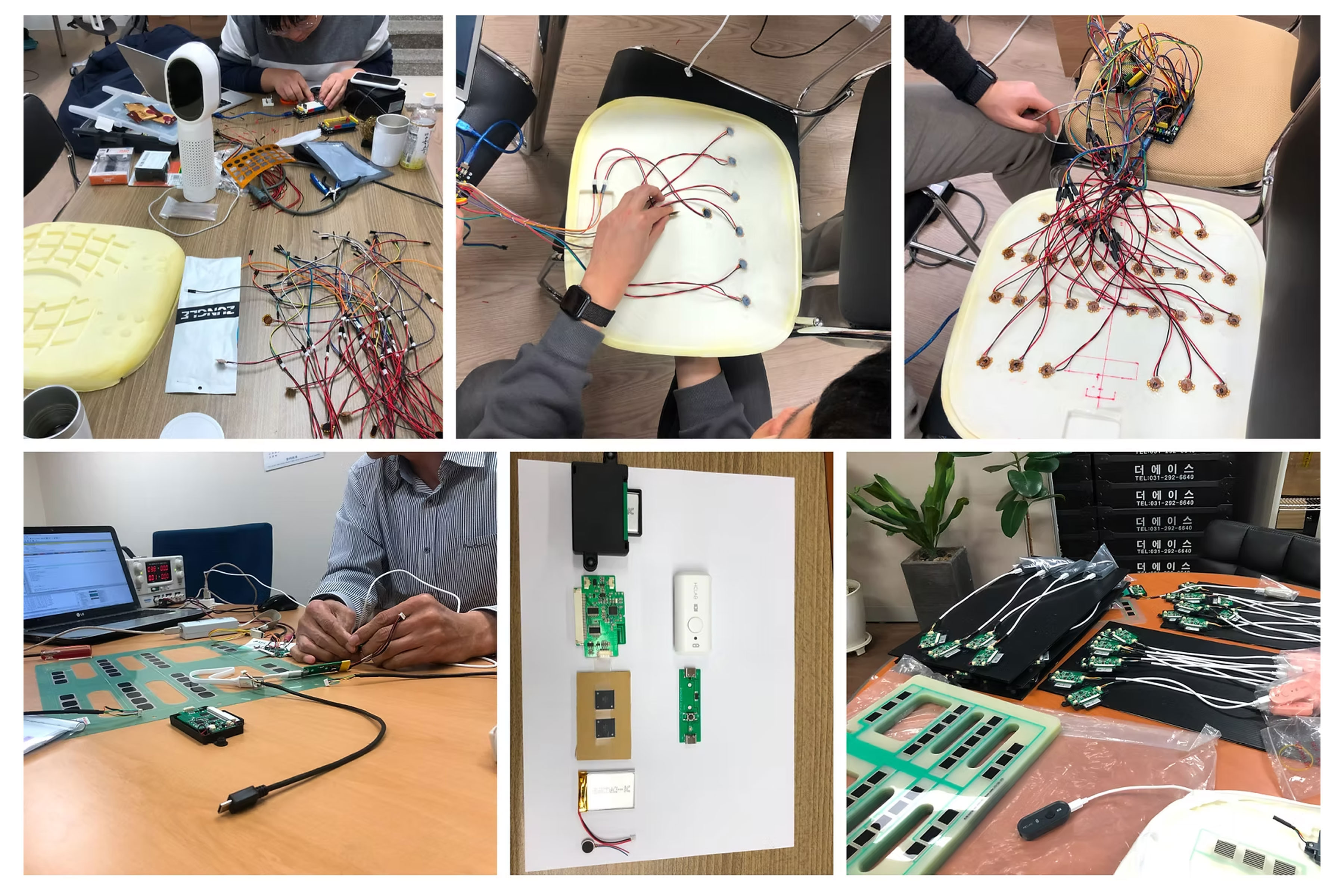
Integrating IoT intelligence
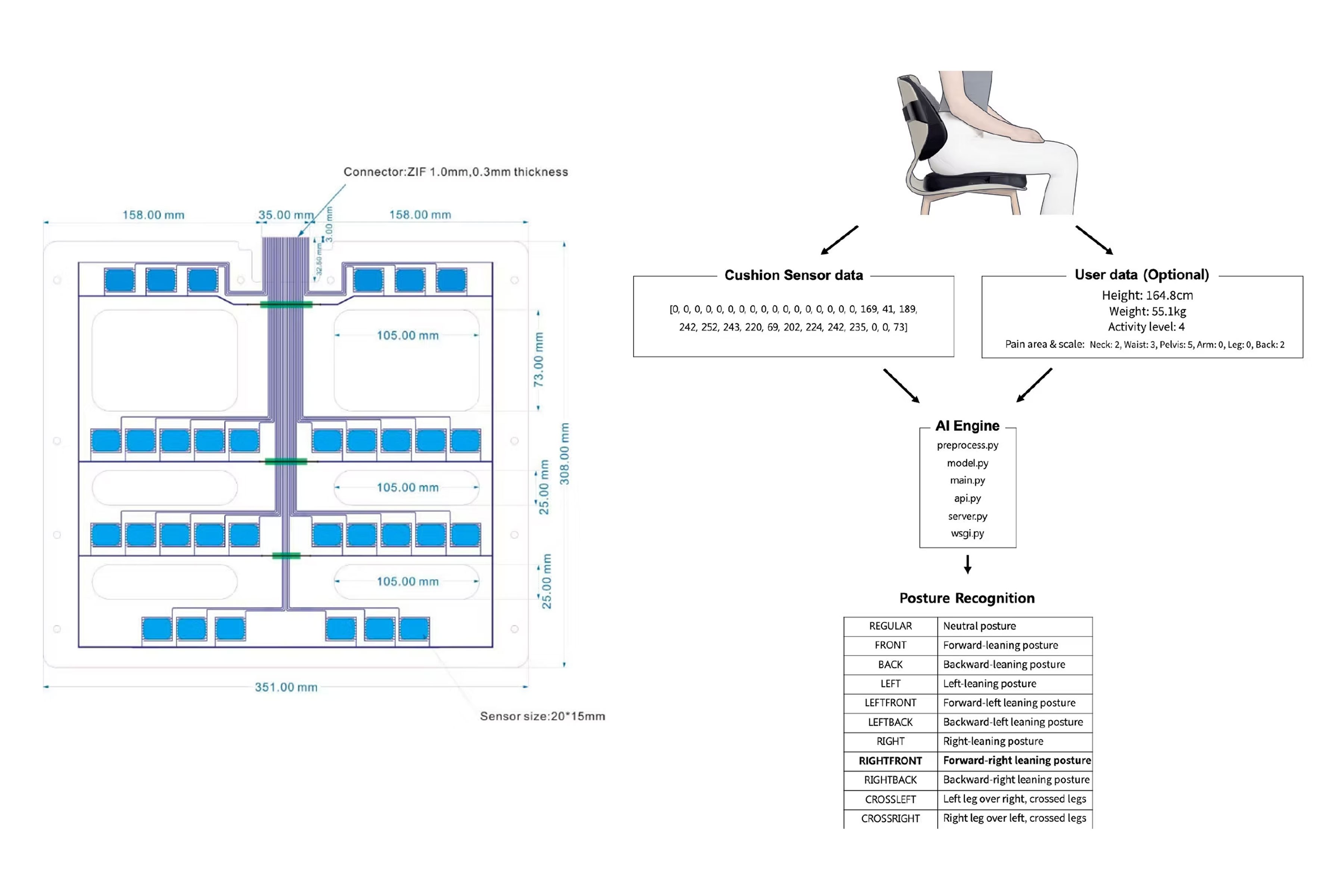
The next step was to bring intelligence into the cushion. To capture posture in real time, we embedded 32 Force-Sensitive Resistor (FSR) sensors, capable of detecting 11 distinct sitting postures — from leaning and crossing legs to forward or diagonal tilts. Early prototypes were built with Arduino boards, but as we prepared for mass production, we partnered with hardware specialists to design custom circuit boards tailored to our cushion’s structure. The final PCB system integrated a Bluetooth module and MCU chip for stable, low-latency data transmission, seamlessly connecting posture data to the mobile app.
Designing the companion software
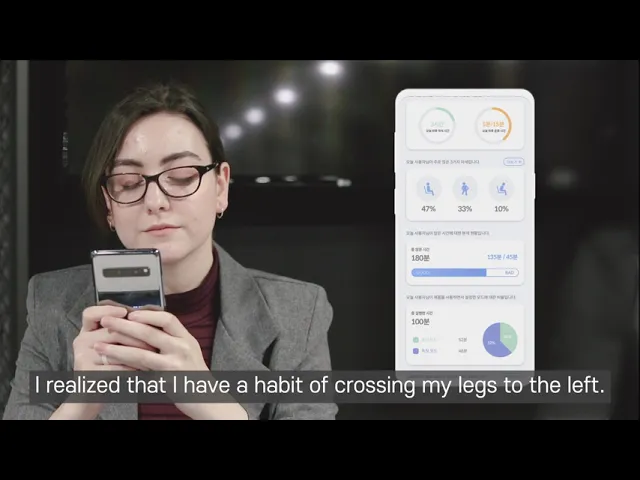
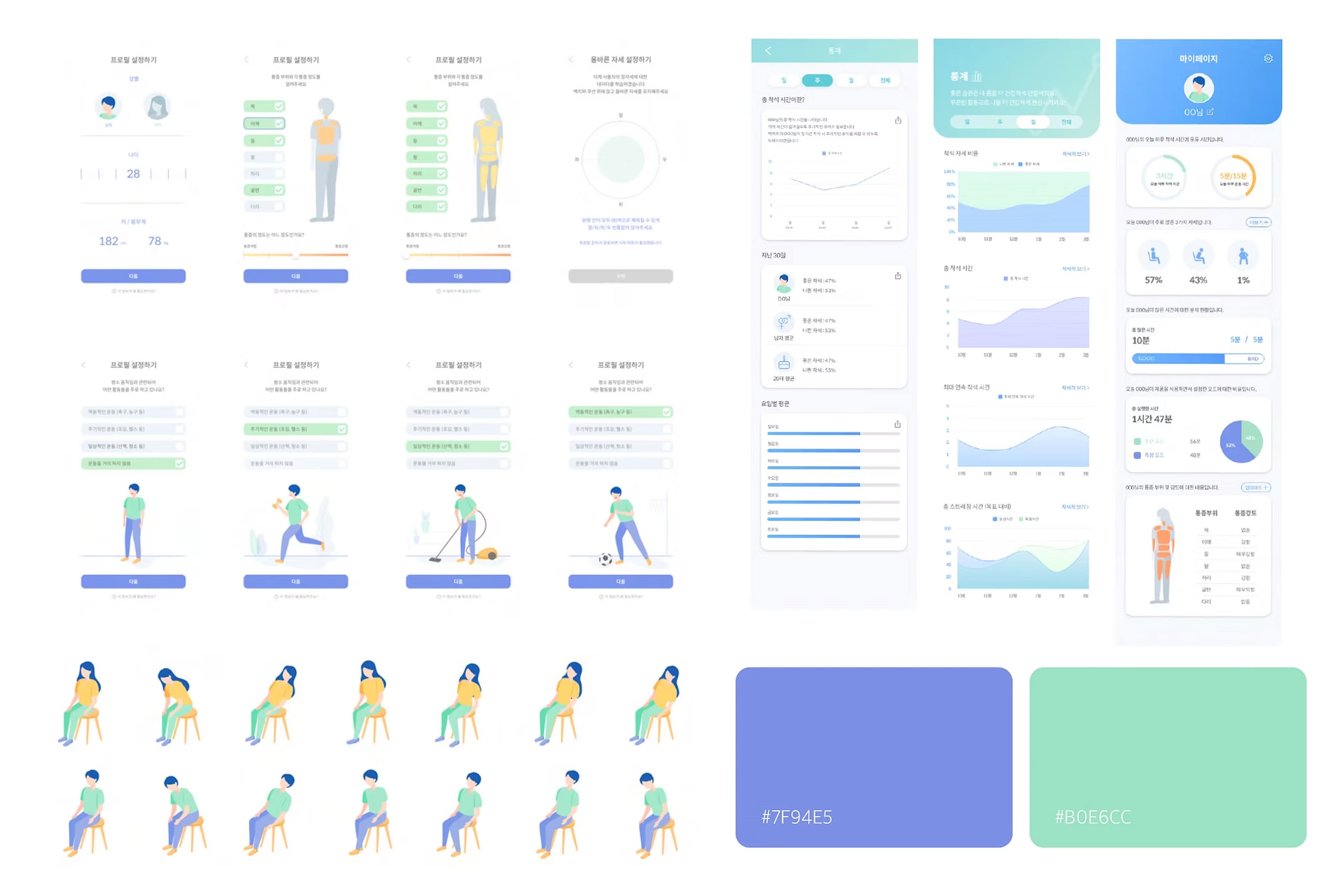
The next challenge was designing the software that connects to the device. At first, our goal was to make the app as engaging as possible — showing real-time animated posture feedback and offering a variety of detailed data visualizations. These features received enthusiastic responses during exhibitions and early demos. However, once the product launched through crowdfunding, we realized that the app’s constant alerts and interactive elements were becoming distractions in users’ daily routines. This led us to redefine the experience entirely. Instead of pulling users into the app, we designed it to stay quietly in the background — focused on essential functions such as device calibration, posture tracking, and simple summaries of sitting habits.
Calibrating through real-world data
The final and most crucial step was data calibration. After selecting 32 pressure sensors through internal testing, we launched the product via crowdfunding and collected posture data from over 200 users. Soon, we discovered that the measured posture often didn’t match how users actually felt — the readings varied greatly by age, body shape, clothing, and sitting habits. To solve this, we shifted from interpreting absolute raw data to using relative calibration. When pairing the device with the app, users were asked to sit in their correct posture for five seconds, which the system recorded as their personal baseline. They then mimicked their typical “bad” postures to define individual deviation ranges. Based on these references, Keeper’s vibration motor gently alerted users when they strayed from their optimal posture for too long. This personalized calibration process drastically improved accuracy and user satisfaction — 93% of participants later reported that the device measured their posture reliably.
Reflection
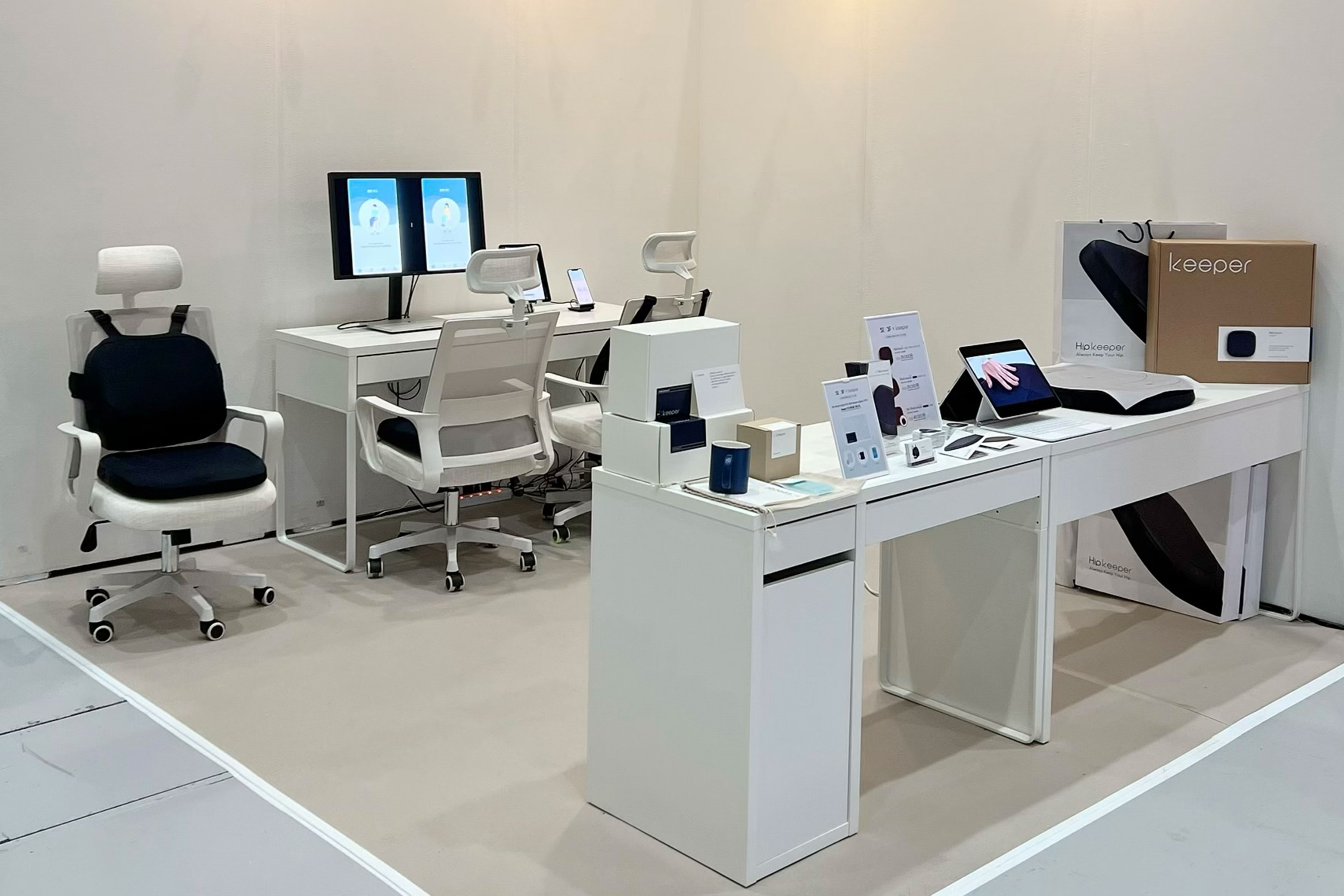
Looking back, it still feels surreal that I managed to bring a connected hardware product to market without any prior manufacturing experience. After leaving the Ergonomics Design Lab to commercialize Keeper in early 2020 — right as COVID-19 hit — I faced countless obstacles: factory shutdowns, production delays, and financial uncertainty. Yet with strong support from mentors, teammates, and early believers, I pushed forward, securing government grants and private investment to complete our prototype that same year and officially launch in 2021.
Leading this process taught me lessons far beyond design. I learned that building hardware is as much about resilience and communication as it is about technology. I also realized the cost of over-engineering — how ambition can sometimes cloud simplicity. Though Keeper wasn’t a commercial hit, it became a milestone of growth, showing me how to turn empathy-driven design into reality. Eventually, our team merged with Charco, marking not an end, but a continuation of the same mission: creating technology that quietly improves everyday life.