Iamschool
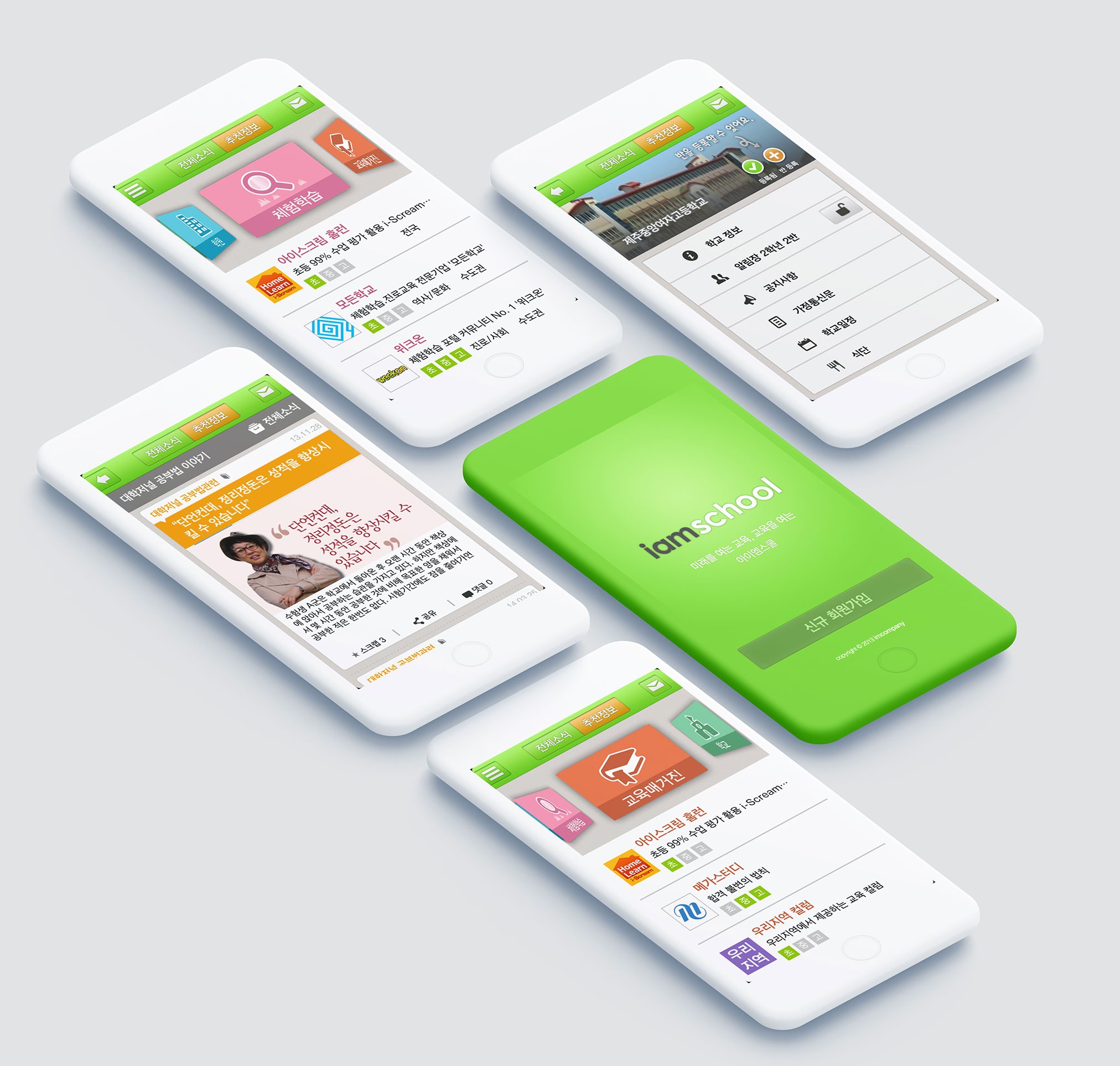
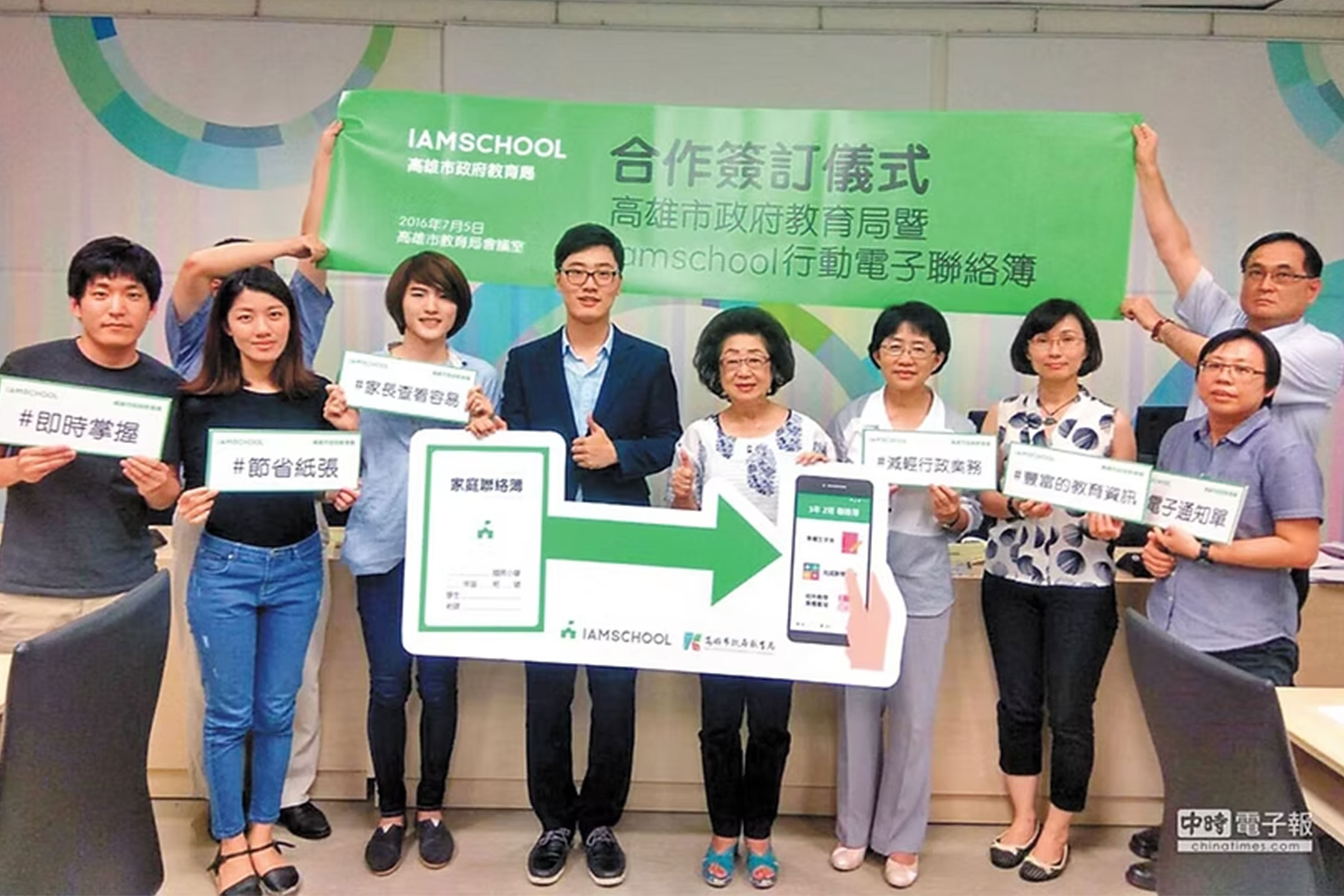
As a UX Designer, I contributed to the early design and planning of Iamschool, a mobile platform that connects K–12 schools and parents through digital communication. Launched successfully in 2012, Iamschool quickly became the leading school communication platform in South Korea. In 2017, it was acquired by NHN Entertainment (the parent company of Naver) for approximately $10 million, and has since grown into Asia’s largest K–12 school communication service.

Recognizing the Purpose
After founding BAD Company and releasing several apps like LoopMonster, I gained early insight into the App Store ecosystem — where most products chased short-term profits. Seeking more lasting social impact, I joined Iamschool, a young startup from KAIST aiming to replace wasteful paper newsletters and bridge educational inequality. Their mission to use technology for social and environmental good resonated deeply with me, leading me to join as one of the early members shaping its product and user experience.
Researching school communication
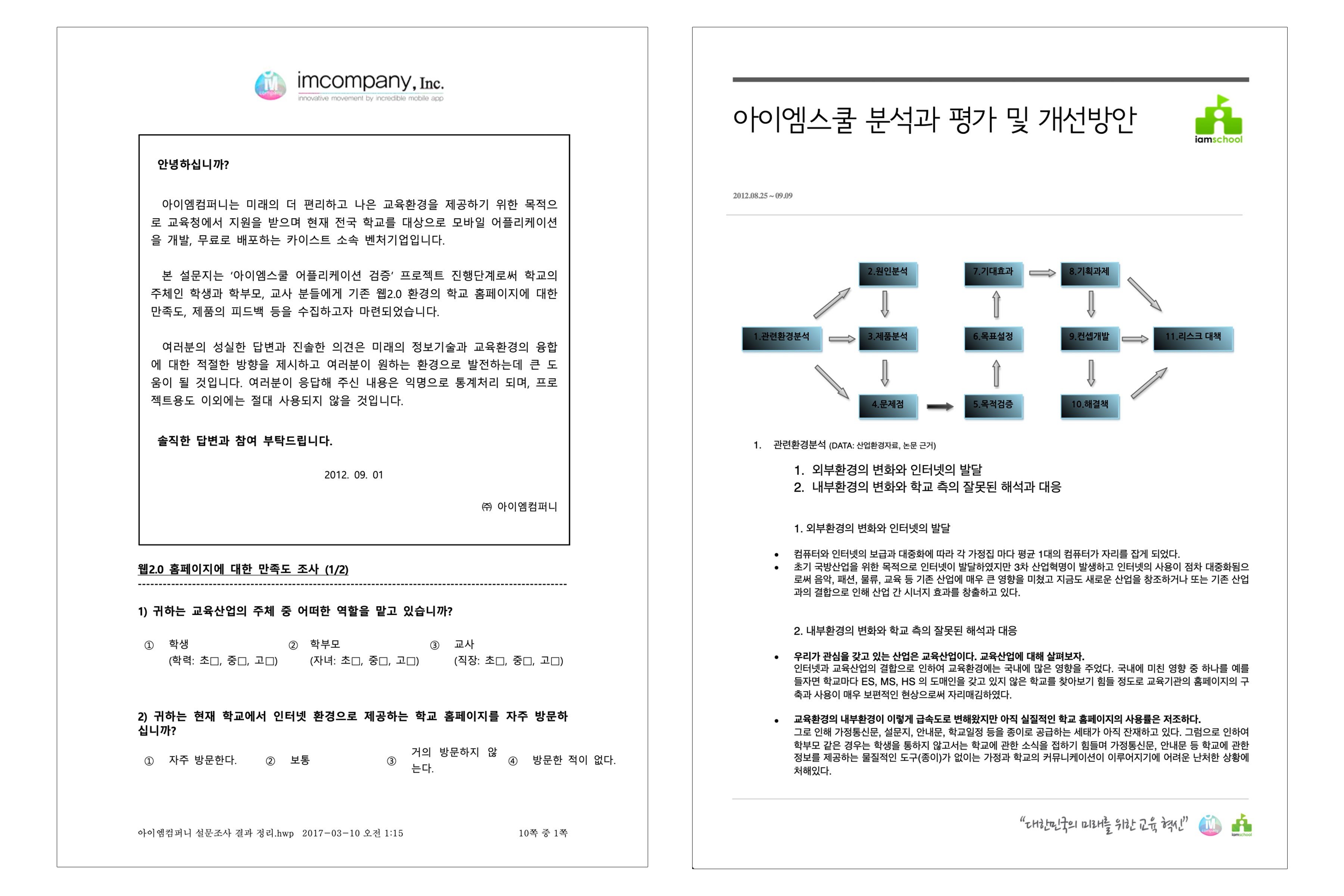
My first assignment after joining the company was to analyze the initial prototype of the Iamschool app from a UX perspective, gathering user feedback and identifying key areas for improvement. In 2012, UX design was still an emerging concept in Korea, and I was concurrently auditing UX courses at KAIST to apply its principles, such as user journey mapping and affinity modeling, to my work. (This was also the moment I decided to formally pursue higher education.)
Over two weeks, I conducted in-person interviews with 12 students, 8 parents, and 12 teachers, exploring their experiences with school communication and their expectations for the app. Using these insights, I analyzed each stakeholder’s pain points and priorities, identifying both critical usability issues and broader design opportunities. Ultimately, my conclusion was that student engagement should be at the core of the service — an unconventional but essential shift to make school communication more interactive and meaningful.
Redesigning user experience
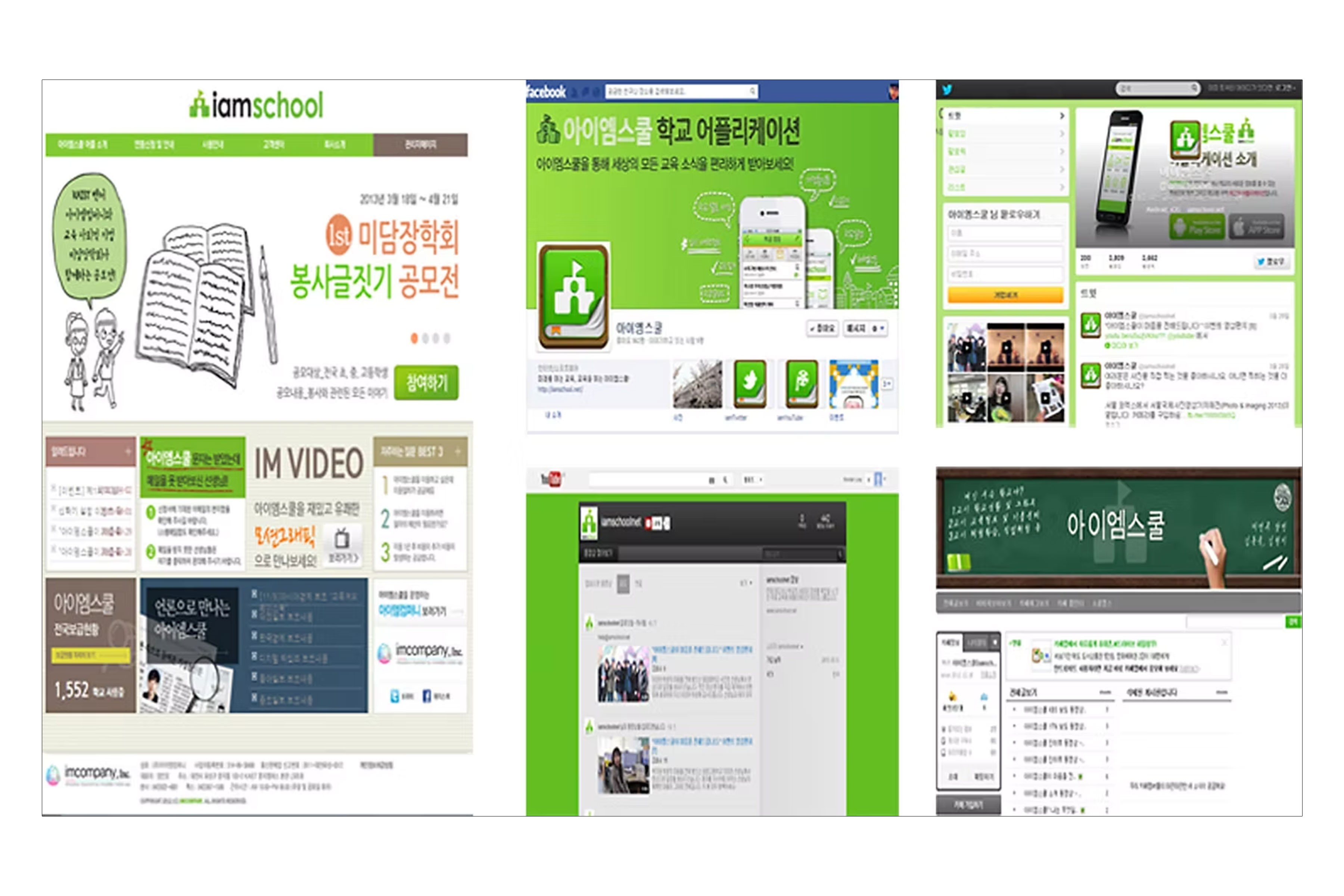
Although my title was UX Designer, my role extended far beyond interface design — it involved branding, marketing, and user engagement strategy. The app initially felt overly formal and rigid. From my earlier interviews with teachers, parents, and students, I learned that most users perceived Iamschool as merely an extension of the school website, which limited its potential impact. Since the platform’s goal was to strengthen communication between schools and parents, we needed to move beyond the outdated image of static, text-heavy school sites.
To address this, we stopped simply crawling existing school web data and instead developed a dedicated admin software for partner schools. We trained teachers and administrators to use it, ensuring that announcements and class updates were formatted natively for mobile screens. I also visited schools regularly to gather feedback and quickly implement improvements. These efforts helped expand the number of registered schools from fewer than ten to over fifty during my time at the company.
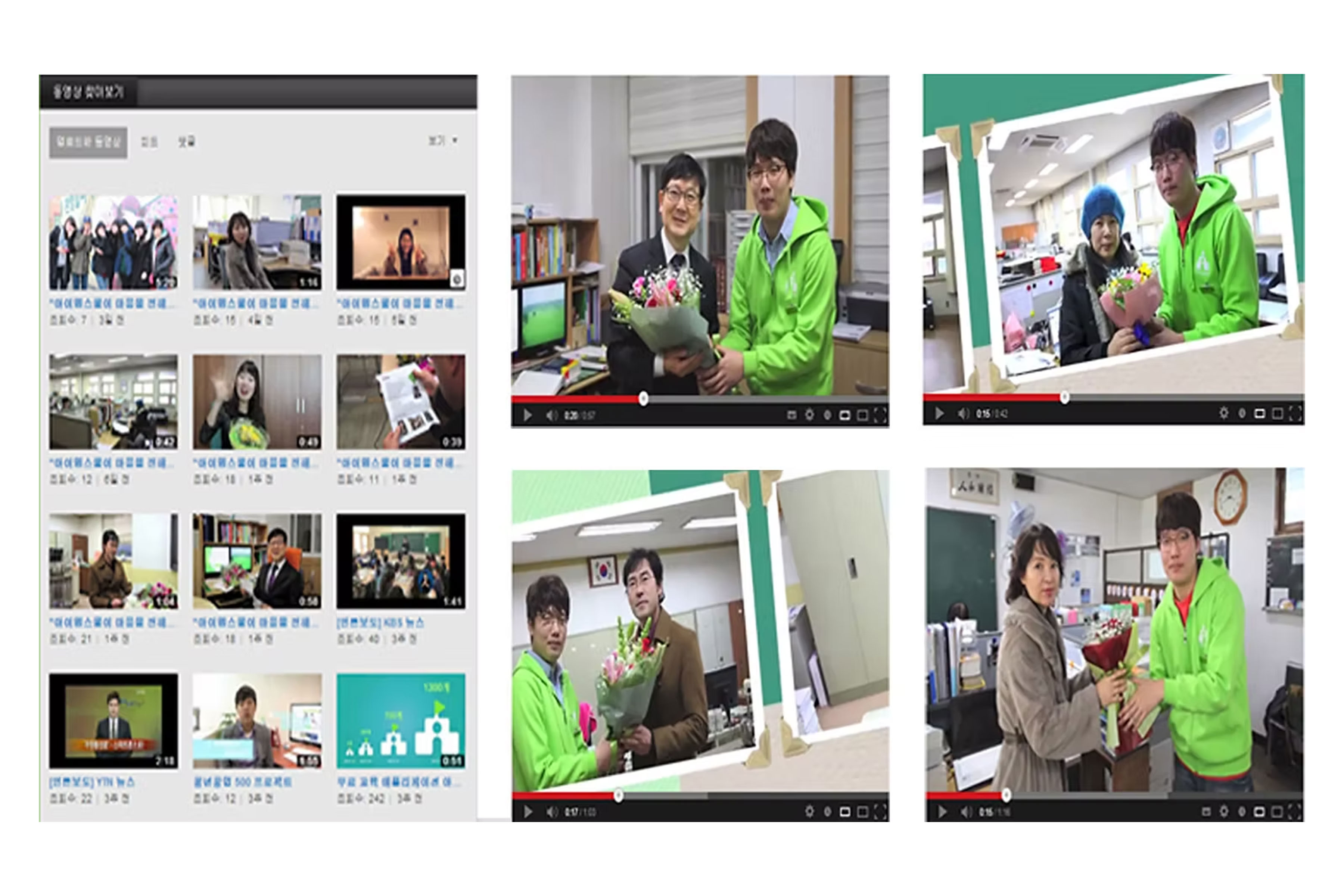
Beyond product design, I also worked on emotional marketing campaigns — most notably a Teacher’s Day initiative where students sent video messages and flowers to their teachers through the app. This campaign helped shift Iamschool’s image from a bureaucratic communication tool to a warm, community-driven platform. Collaborating across design, development, and marketing teams, I aimed to build a cohesive experience that felt both functional and human.
Reflection
Working at Iamschool was one of the most formative experiences of my career. Being part of a fast-growing platform company taught me how theory, business, and design intersect in real life. As I studied UX design theory while auditing university courses, I began to see how academic frameworks — like user research and interaction principles — could directly inform practice. Observing how the founders, graduates from one of Korea’s top universities, used their credibility to gain trust from schools also inspired me to return to college and continue my formal education.
At the same time, I learned that business considerations shape design decisions just as much as user insights do. From my interviews, I believed that engaging students — through features like polls, lunch menus, and activity programs — was essential to making the service truly vibrant. However, the leadership took a different view: monetizing through schools and parents offered a sustainable model, while a student-focused service would be harder to scale or commercialize. Back then, I struggled to accept that decision. But in hindsight, I understand it was a strategic choice that helped the company grow from a small startup to a service later acquired for $10 million.
This experience taught me that great design must balance empathy, technology, and business viability. It was the moment I began to think not just as a designer, but as someone who builds sustainable systems of value.